From fragmented producers to a powerful regional export platform
A new agricultural export story is emerging across Eastern Africa.
Kenya, Uganda, Tanzania and Malawi are increasingly connected not simply by geography, but by something much more commercially important: agricultural production, regional trade, logistics corridors, processing capacity and access to global markets.
Together, these four countries form a powerful production belt stretching from the Indian Ocean through the Great Lakes and into Southern/Eastern Africa.
The region already produces globally traded coffee, tea, tobacco, cashews, horticultural products, cereals, pulses, oilseeds, sugar, cotton, cocoa and other commodities.
What is changing is the scale.
The opportunity is moving from individual countries exporting individual commodities toward a regional agribusiness and export ecosystem capable of aggregating production, processing commodities, connecting farmers to international buyers and moving large volumes through the ports of Mombasa and Dar es Salaam.
The evidence is already visible.
1. Uganda: The coffee export breakthrough
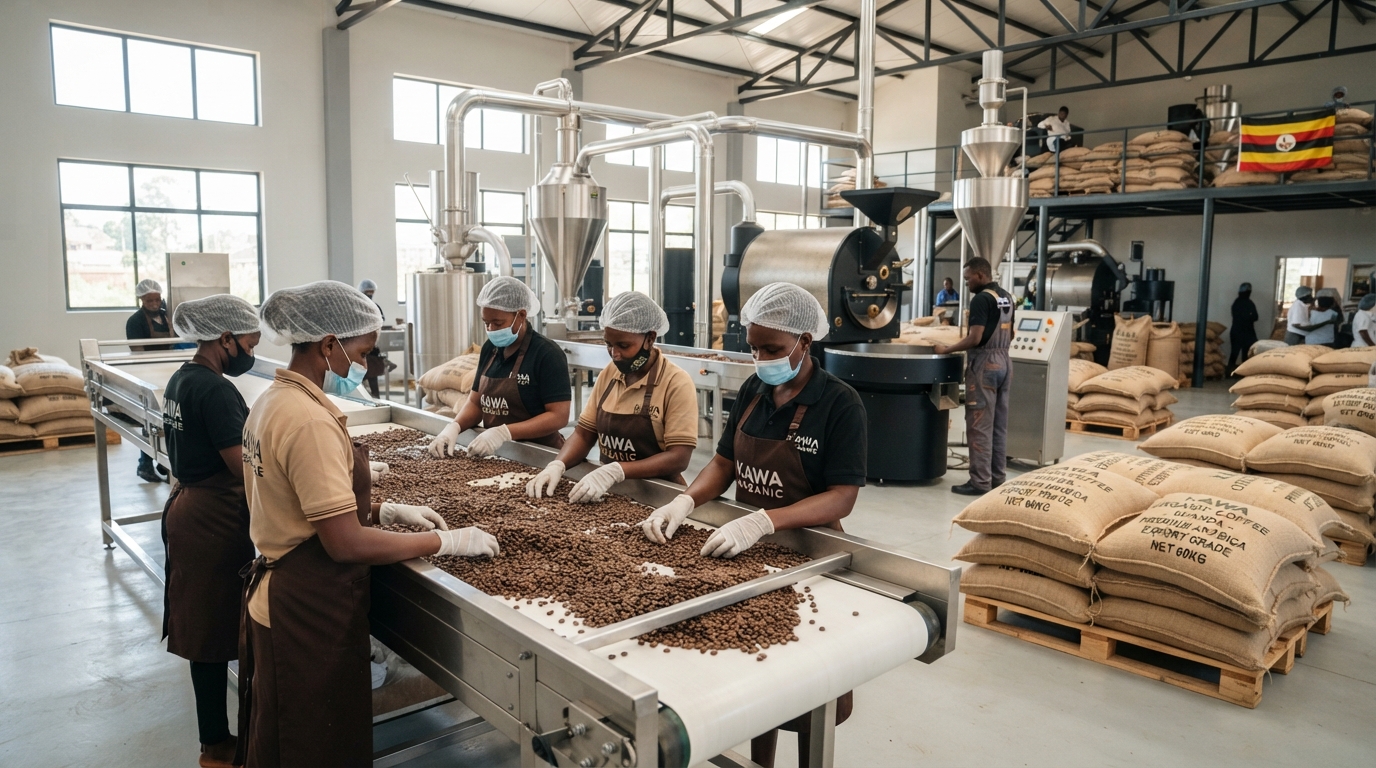
Perhaps the clearest recent example of East Africa's export potential is Uganda's coffee industry.
Uganda has transformed coffee into its leading agricultural export and has recently reached record export levels.
According to Uganda's Ministry of Agriculture, Uganda exported 7.93 million 60-kg bags of coffee worth approximately US$2.24 billion during the 12 months to August 2025.
That represented a 58.7% increase in export value compared with the previous year.
Even more striking, Uganda briefly emerged as Africa's leading coffee exporter, with May 2025 monthly exports reaching approximately 47,607 tonnes and annual export revenues exceeding US$2 billion.
Uganda's coffee is reaching Europe, Asia, Africa and other international markets.
The Japanese market is particularly interesting. Uganda's Ministry of Agriculture reports that Japanese imports of Ugandan green coffee increased from approximately US$4.3 million in 2021 to US$12 million in 2023, while volumes increased from 1.42 million kg to 3.83 million kg.
This is more than a commodity success story.
It demonstrates that an East African country can move from being primarily a raw-material producer toward becoming a globally recognized origin and supply partner.
Uganda's experience also demonstrates the importance of combining:
The lesson is highly relevant to the other countries in the corridor.
2. Kenya: From tea and flowers to a diversified export platform
Kenya is already one of Africa's best-known agricultural export brands.
Its tea, coffee, flowers, vegetables and fruits have established the country as a major supplier to international markets.
Kenya's tea industry provides one of the strongest examples.
According to the UN Economic Commission for Africa, Kenya's tea exports reached a record approximately US$1.7 billion in 2024, compared with about US$1.4 billion in 2023.
Kenya's export ecosystem is also considerably broader than tea.
Official Central Bank of Kenya data tracks substantial exports of coffee, tea and horticultural products, with horticulture generating billions of Kenyan shillings each month in 2025–2026.
The country has also developed sophisticated export infrastructure around Nairobi, Mombasa and the aviation/cargo ecosystem.
That makes Kenya particularly important to a regional strategy.
Kenya is not only a producer.
It can increasingly function as:
production + processing + finance + logistics + international marketing + export gateway.
The Mombasa gateway gives the wider East African agricultural economy access to the Indian Ocean and global shipping markets.
3. Tanzania: A rapidly expanding agricultural export powerhouse
Tanzania brings something different to the regional equation: scale and diversity.
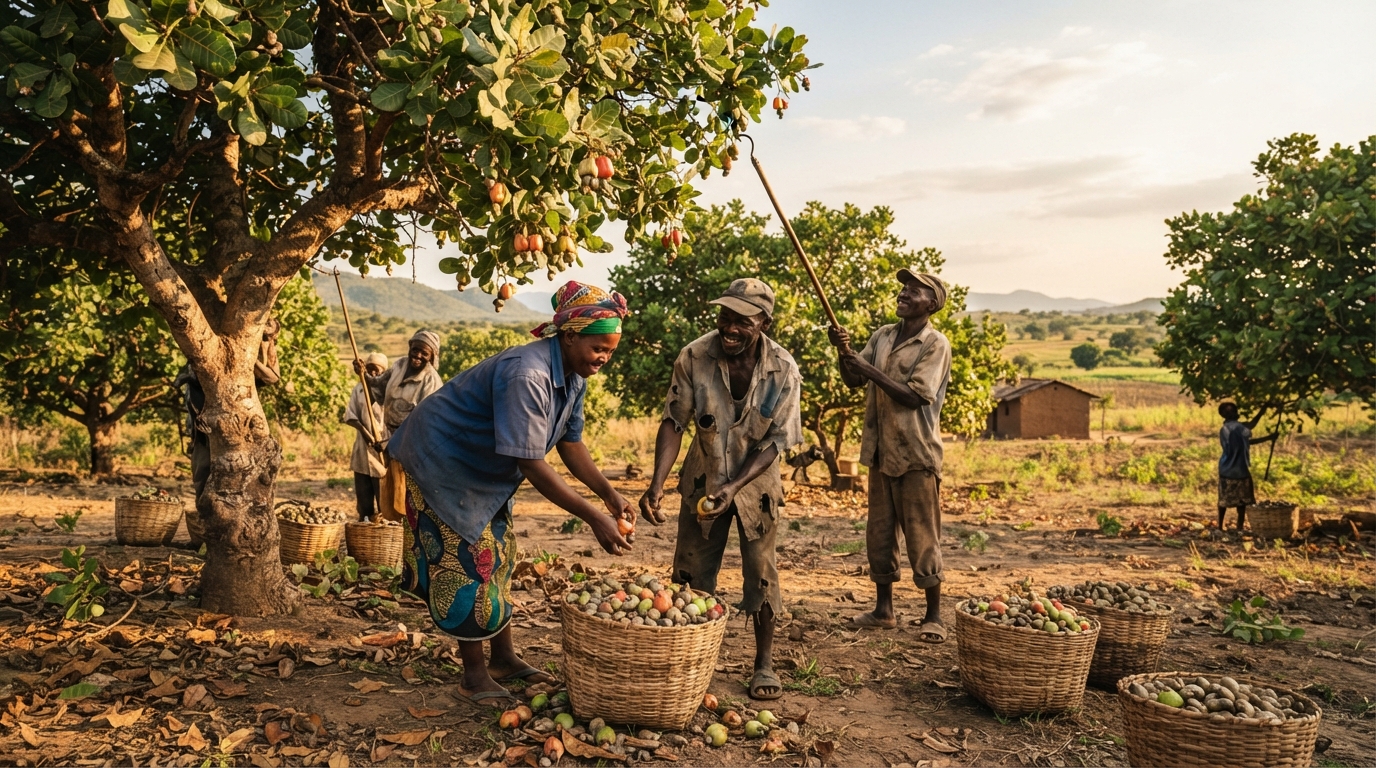
Its agricultural export basket includes cashews, tobacco, coffee, tea, cotton, horticultural products, cereals, pulses, oilseeds and other commodities.
The country's Ministry of Agriculture reported that during FY2023/24:
maize and rice exports were worth approximately US$346.5 million;
chickpeas, pigeon peas, mung beans, soybeans and black peas accounted for approximately 519,765 tonnes worth US$506.8 million;
avocado exports reached approximately 35,627 tonnes worth US$100.9 million;
traditional export crops generated approximately US$872.8 million.
The strongest growth was recorded in several major commodities. Cashew exports reached approximately US$372.4 million, while tobacco exports reached approximately US$344.1 million.
Tanzania is therefore developing a remarkable combination of:
volume + commodity diversity + export growth + Indian Ocean access.
Its importance goes beyond Tanzania itself.
The Central Corridor connects Dar es Salaam with inland markets and landlocked economies.
That creates an opportunity for Tanzania to function as a major export gateway for agricultural production from a much larger geographical area.
4. Tanzania is already feeding regional markets
One of the most important developments is that regional agricultural trade is already happening at significant scale.
World Bank trade data shows that Tanzania exported approximately 385,571 tonnes of milled rice worth US$196.3 million in 2024.
Uganda alone received approximately 284,381 tonnes, worth about US$108.1 million.
Kenya received another approximately 44,426 tonnes, worth about US$56.2 million.
This is an important indication of what the regional corridor can become.
The region does not have to wait for a future integration project.
The commercial integration is already happening.
Tanzania is supplying Uganda and Kenya.
Kenya supplies regional markets.
Uganda supplies global coffee markets.
And the same logistics infrastructure can increasingly be used to aggregate commodities for international buyers.
5. Malawi: The southern agricultural export engine
Malawi adds another important dimension.
It is not an EAC member, but commercially it is highly relevant to the wider Eastern African export system because of its agricultural production and connection to the Dar es Salaam and southern African transport networks.
Malawi's export economy is strongly agricultural.
Its major export commodities include:
In 2024, Malawi exported approximately US$554 million of partly or wholly stemmed/stripped tobacco, representing more than 81,000 tonnes.
Its tea industry also has an established international market.
Malawi exported approximately 28,252 tonnes of tea worth US$69.4 million in 2024.
The United Kingdom was the largest destination, followed by South Africa and the United States. Importantly for regional integration, Kenya was also a significant destination, purchasing approximately 1,555 tonnes worth US$2.16 million.
This demonstrates that Malawi is already connected to the wider regional agricultural trade network.
6. The real story is not four countries—it is the corridor
The most important opportunity emerges when these individual success stories are viewed together.
Kenya has:
Mombasa + tea + coffee + horticulture + logistics + financial services.
Uganda has:
coffee + cereals + oilseeds + livestock + large agricultural production potential.
Tanzania has:
Dar es Salaam + cashews + tobacco + rice + pulses + maize + coffee + horticulture + enormous agricultural land.
Malawi has:
tobacco + tea + sugar + pulses + oilseeds + agricultural production + access to southern/eastern trade routes.
The combination creates a regional production and export platform that is considerably larger than any one national market.
7. Two ocean gateways create strategic flexibility
One of the most important advantages of the region is the existence of two major Indian Ocean gateways:
Mombasa
Mombasa is the principal gateway for the Northern Corridor.
The corridor connects Mombasa through Kenya toward Uganda and onward to other landlocked markets.
Dar es Salaam
Dar es Salaam is the principal gateway of the Central Corridor.
The corridor connects Tanzania with Uganda and extends toward the Democratic Republic of Congo, Rwanda, Burundi, Zambia and Malawi.
The World Bank has described the Northern and Central Corridors as the major international trade routes serving Eastern Africa.
This creates an important commercial advantage.
A commodity producer does not necessarily have to depend on a single export route.
Regional exporters can increasingly evaluate:
farm → aggregation center → processing facility → Mombasa
or
farm → aggregation center → processing facility → Dar es Salaam.
For large-volume exporters, this flexibility can become strategically important.
8. Regional trade is already accelerating
The broader East African market is also growing.
The East African Community reported that total EAC trade with the rest of the world increased to approximately US$124.9 billion in 2024, while EAC exports increased to approximately US$56 billion.
Intra-EAC trade also increased to approximately US$15.2 billion.
More recent EAC figures show continued expansion.
In 2025, intra-EAC trade reached approximately US$19.3 billion, representing a 28% increase according to the EAC's latest statistics.
This matters because regional trade can create the industrial base necessary for larger international exports.
A country does not have to export everything directly to Europe, China, India or the Middle East.
It can first develop regional value chains.
For example:
Tanzania → Uganda → processing → international market
or
Malawi → Tanzania → Dar es Salaam → Asia/Middle East
or
Uganda → Kenya → Mombasa → international market.
9. The next phase: from commodity exports to value-added exports
The biggest opportunity may not be exporting more raw commodities.
It may be processing them before export.
The region already has enormous volumes of agricultural raw materials.
The next generation of businesses can convert these into:
roasted and soluble coffee;
specialty coffee;
refined vegetable oils;
soybean meal;
animal feed;
starch;
cassava flour;
protein ingredients;
pulses and cleaned grains;
fruit concentrates;
dried fruits;
cocoa ingredients;
cashew kernels;
cashew shell products;
tea blends;
essential oils;
natural ingredients;
nutraceutical ingredients;
packaged foods.
This is where the economic value of the corridor could increase dramatically.
The objective becomes:
not simply exporting tonnes, but exporting tonnes with more value per tonne.
10. The rise of regional aggregation
One of the biggest structural opportunities is aggregation.
International industrial buyers increasingly want:
A small farmer cannot normally provide this alone.
A regional export platform can.
Imagine an international buyer requiring:
15,000 MT/month of a specific agricultural commodity.
Rather than looking for a single farm or company capable of producing that volume, the regional system can aggregate:
Kenya
through standardized specifications, quality-control systems, warehouses and processing facilities.
The result is a new model:
Thousands of producers → regional aggregation → standardized processing → international buyer.
11. Digital agriculture can become the missing layer
The next transformation may be digital.
The region's agricultural exporters increasingly need to know:
Where was the crop produced?
Who produced it?
When was it harvested?
What inputs were used?
What was the quality?
Where was it processed?
Which warehouse handled it?
Which truck transported it?
Which container carried it?
Which buyer received it?
This is particularly important as international markets demand stronger traceability and sustainability documentation.
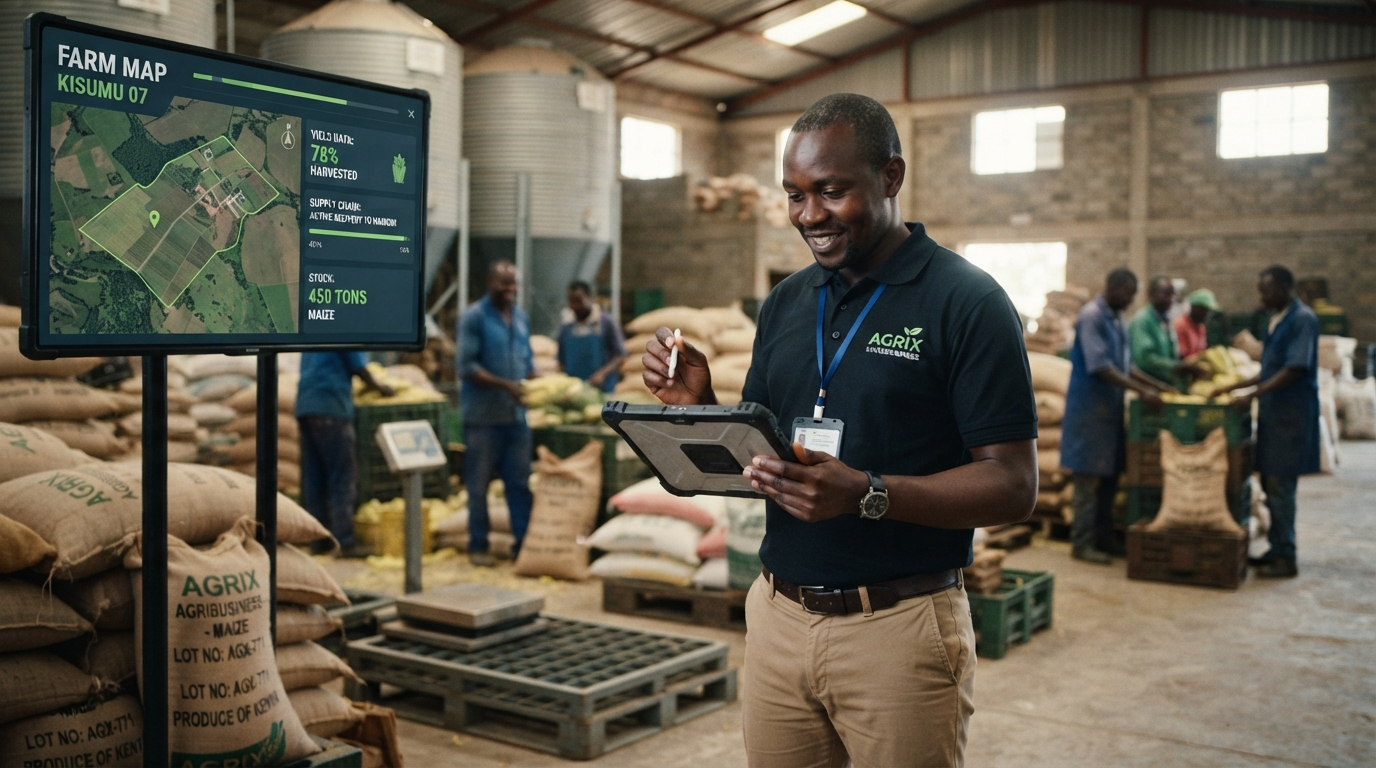
Digital platforms combining farmer registration, GPS mapping, aggregation, quality control, warehouse management, export documentation, buyer management and compliance can therefore become critical infrastructure for the regional export economy.
The EAC itself identifies digitalisation and multimodal infrastructure as priorities for strengthening regional trade and integration.
12. A region moving from producers to global suppliers
The evidence points toward a broader transformation.
Uganda demonstrates that an African agricultural commodity can become a US$2+ billion export industry.
Kenya demonstrates how agriculture can be combined with sophisticated logistics, horticulture and international market infrastructure.
Tanzania demonstrates the potential of large-scale diversified agricultural exports.
Malawi demonstrates how a landlocked agricultural economy can build significant international export industries around tobacco, tea, sugar and other commodities.
Together they demonstrate something larger:
Eastern Africa is becoming increasingly capable of supplying global agricultural markets at commercial scale.
13. The opportunity for international buyers
For international buyers, the region should increasingly be viewed not as four isolated countries but as a multi-origin sourcing platform.
A buyer seeking agricultural commodities could potentially establish:
Origin 1 — Kenya
Premium horticulture, tea, coffee and specialized agricultural products.
Origin 2 — Uganda
Robusta and Arabica coffee, cereals, oilseeds and other agricultural commodities.
Origin 3 — Tanzania
Rice, pulses, maize, cashews, tobacco, coffee, cotton, horticulture and other commodities.
Origin 4 — Malawi
Tobacco, tea, sugar, pulses and oilseeds.
The advantage is diversification.
If production is affected in one origin, another origin may potentially compensate.
If one port becomes congested, another route may be evaluated.
If one country has a particular crop advantage, the regional sourcing network can prioritize that origin.
This is the beginning of portfolio-based agricultural sourcing.
14. From farms to 15,000–50,000 MT/month export programs
The next stage of East Africa's agricultural development will increasingly involve larger supply programs.
Instead of asking:
"How many tonnes can this farmer or cooperative export?"
international buyers will increasingly ask:
"Can your regional supply network guarantee 15,000 tonnes every month?"
That changes the business model.
The winning companies will need to build:
farmer networks + aggregation centers + warehouses + processing + quality control + digital traceability + logistics + finance + international sales.
This is the architecture required to transform agricultural production into industrial-scale export programs.
15. East Africa's competitive advantage: diversity
The greatest strength of this corridor may be its diversity.
Different climates and agricultural zones allow the region to produce different commodities.
This creates opportunities for year-round sourcing and portfolio diversification.
The region can participate in global markets for:
Coffee
Uganda, Kenya and Tanzania
Tea
Kenya, Tanzania and Malawi
Cashews
Tanzania
Tobacco
Malawi and Tanzania
Rice
Tanzania
Pulses
Tanzania, Uganda and Malawi
Oilseeds
Uganda, Tanzania and Malawi
Horticulture
Kenya, Tanzania and Uganda
Maize and cereals
Tanzania, Uganda, Kenya and Malawi
Sugar
Malawi, Tanzania, Uganda and Kenya
The opportunity is therefore not one commodity.
It is a multi-commodity export ecosystem.
16. The global market is beginning to notice
The evidence is already visible in international trade statistics.
Uganda is recording historic coffee exports.
Kenya has reached record tea export revenues.
Tanzania is expanding exports of cashews, tobacco, pulses, cereals and horticultural products.
Malawi continues to supply major international tobacco and tea markets.
Meanwhile, regional trade is increasing and transport corridors are being upgraded.
UNECA reported in 2025 that Eastern African exports had demonstrated resilience despite global trade turbulence, with Kenya and Uganda among countries recording substantial export increases to the United States. The organization also highlighted infrastructure investment and regional integration as important drivers of future trade growth.
This suggests that the story is no longer simply about agricultural potential.
The export performance is already happening.
17. The next East African export champions
The next generation of East African agribusiness companies may therefore look very different from traditional commodity traders.
They will be regional rather than purely national.
They will combine:
Agriculture
Processing
Technology
Logistics
Finance
Compliance
International Sales.
They will build supply networks across multiple countries.
They will use digital traceability to demonstrate origin and compliance.
They will process commodities closer to production.
They will negotiate multi-year contracts with international buyers.
And they will increasingly sell not simply a commodity, but a guaranteed supply program.
Conclusion: The emergence of a new African export corridor
The East African story is changing.
Kenya, Uganda, Tanzania and Malawi each have different agricultural strengths, different export histories and different logistics systems.
But their combined capabilities create something much larger.
A regional agricultural production and export platform connected to the Indian Ocean and to some of the world's fastest-growing food and commodity markets.
The success stories are already there:
Uganda's coffee has crossed the US$2 billion export threshold.
Kenya's tea exports have reached record levels.
Tanzania is exporting hundreds of millions of dollars of cashews, tobacco, cereals, pulses and horticultural products.
Malawi is exporting hundreds of millions of dollars of tobacco and tens of millions of dollars of tea.
And regional trade is expanding.
The next challenge is to connect these successes.
The opportunity is to build an integrated system in which:
farmers produce → cooperatives aggregate → processors add value → digital systems provide traceability → logistics corridors move the cargo → Mombasa and Dar es Salaam connect the region to global shipping → international buyers secure long-term supply.
That is the real potential of the East Africa Agribusiness & Export Corridor.
It is not yet a formal economic bloc.
It is something potentially more commercially important:
an emerging cross-border production, processing and export ecosystem capable of supplying the world at increasingly industrial scale.
And if the region succeeds in moving from exporting raw commodities toward exporting processed, traceable, compliant and contract-based agricultural products, East Africa could become one of the world's increasingly important emerging sourcing regions for food, agricultural ingredients and commodities.
The first chapter has already been written.
The next chapter is regional scale.
By Mr. Kosona Chriv
Chief Operating Officer (COO)
Deko Integrated and Agro Processing Limited
3rd and 4th Floors, Idubor House
52 Mission Road
300002 Benin City
Edo State
Nigeria